„Der Abstand der Wolken“ (Leipzig, 2025)
Fiction
6m15s
German Dialogues with English Subtitles
Synopsis
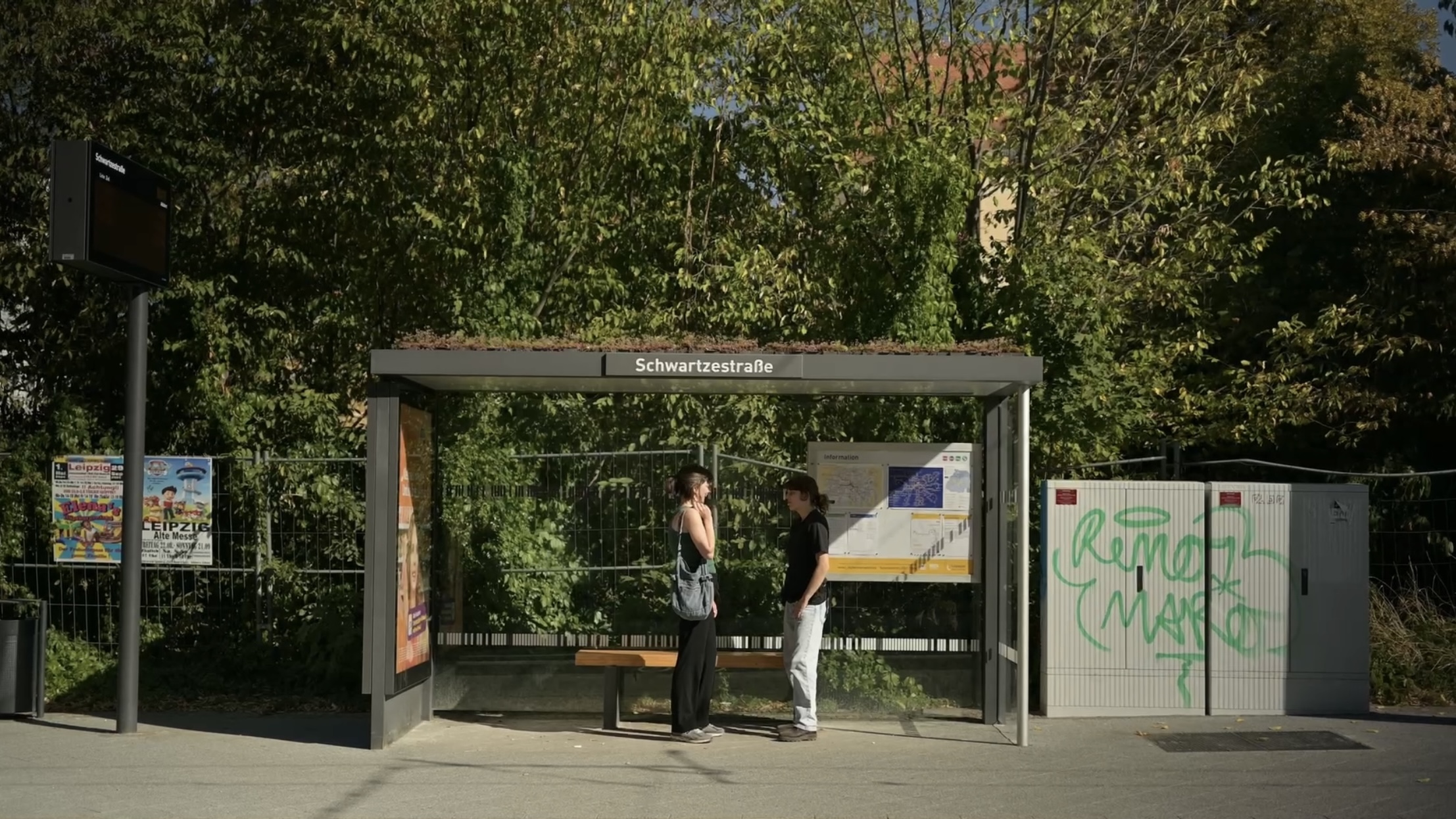
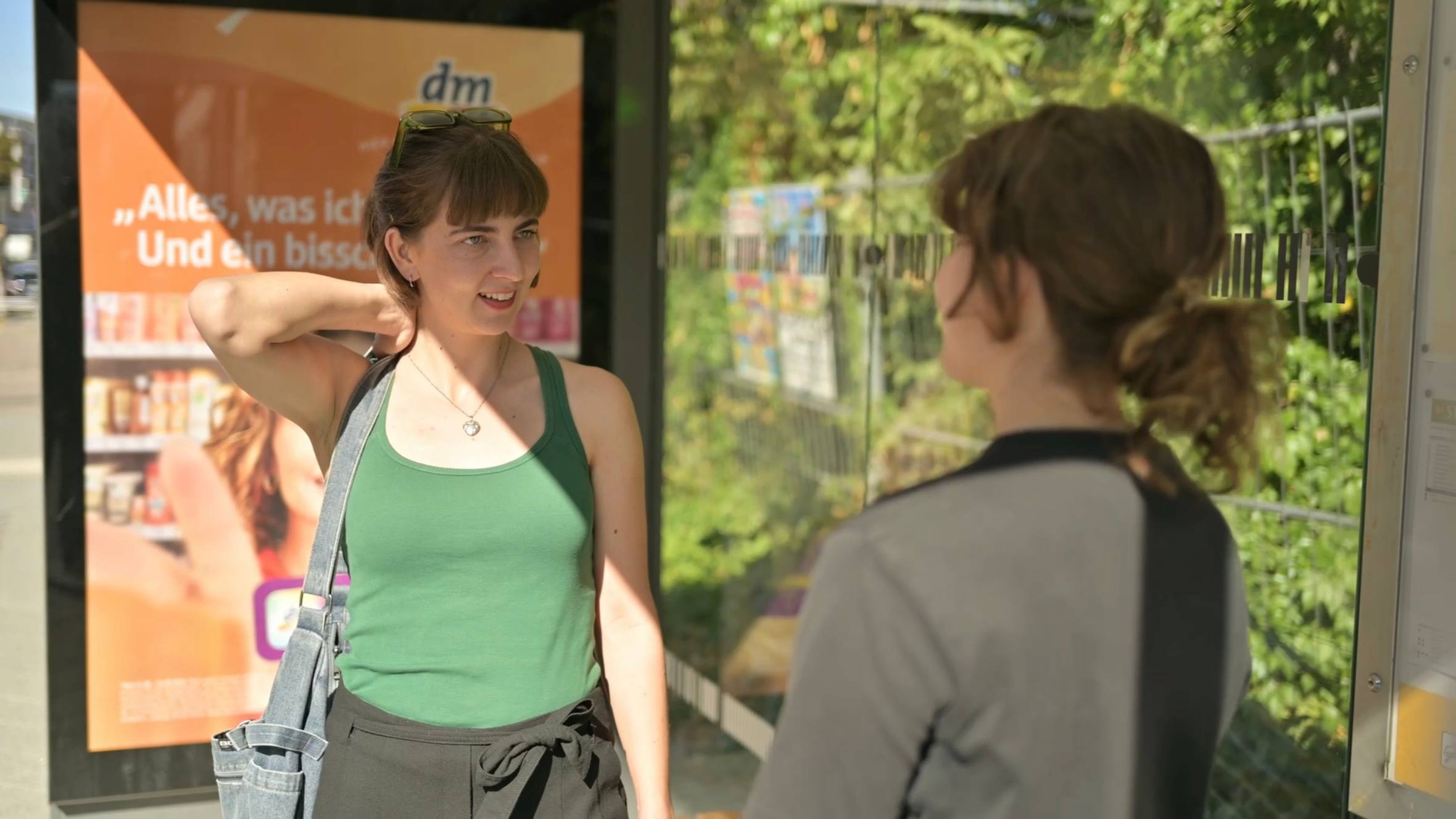
Clouds are ever-changing — just like the closeness and distance between people. Sometimes they draw nearer, sometimes they drift apart.
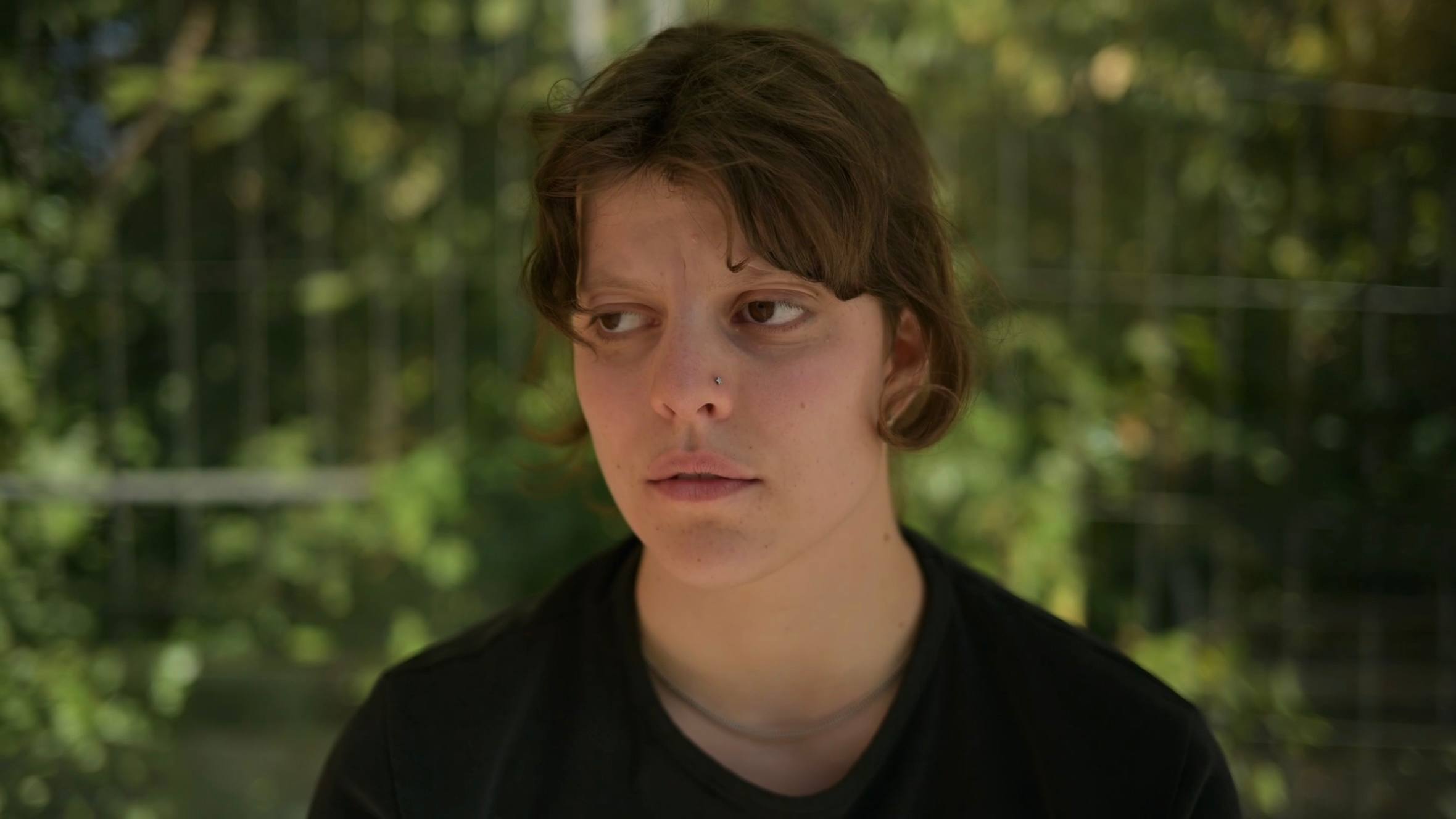
It is a story about uncertainty. In a return to the city of childhood, two protagonists unexpectedly encounter each other, who were best friends from school days, but they haven't seen each other for many years.
Contextualization
The film was created by giving the actors only a story outline rather than a full script, allowing free performance and improvisation.
Fiction
6m15s
German Dialogues with English Subtitles
Synopsis
Clouds are ever-changing — just like the closeness and distance between people. Sometimes they draw nearer, sometimes they drift apart.
It is a story about uncertainty. In a return to the city of childhood, two protagonists unexpectedly encounter each other, who were best friends from school days, but they haven't seen each other for many years.
Contextualization
The film was created by giving the actors only a story outline rather than a full script, allowing free performance and improvisation.
Cast: Jonas Müller (@_jonasmueller) Marie Romeijn (@rommi2202) Hannah Jaitner (@hannah.jaitner)
Story & Directed by Niki Hoi (@nikihoi)
Cinematography: Erik Nürnberg (@enue1000) & Senai
Sound recording: Erik Nürnberg (@enue1000)
Set Assistant: Darko Mi (@dorkezio)
Editing: Niki Hoi (@nikihoi) Herbert Hut (@fater_morganer)
Translator: Herbert Hut (@fater_morganer)
Music & Sound: Rabee Ismail (@rabeeismail2) & Valle Döring
Special thanks to venue provider: Alfred und Wir (@alfredundwir)
Supported by Kino Datsche (@kinodatsche)
It was screened open-air at Luru-Kino in Leipzig.
Story & Directed by Niki Hoi (@nikihoi)
Cinematography: Erik Nürnberg (@enue1000) & Senai
Sound recording: Erik Nürnberg (@enue1000)
Set Assistant: Darko Mi (@dorkezio)
Editing: Niki Hoi (@nikihoi) Herbert Hut (@fater_morganer)
Translator: Herbert Hut (@fater_morganer)
Music & Sound: Rabee Ismail (@rabeeismail2) & Valle Döring
Special thanks to venue provider: Alfred und Wir (@alfredundwir)
Supported by Kino Datsche (@kinodatsche)
It was screened open-air at Luru-Kino in Leipzig.

„Second Daughters“ (Münster, 2025)
Documentary
6m3s
English and Cantonese Dialogues with English Subtitles
Synopsis
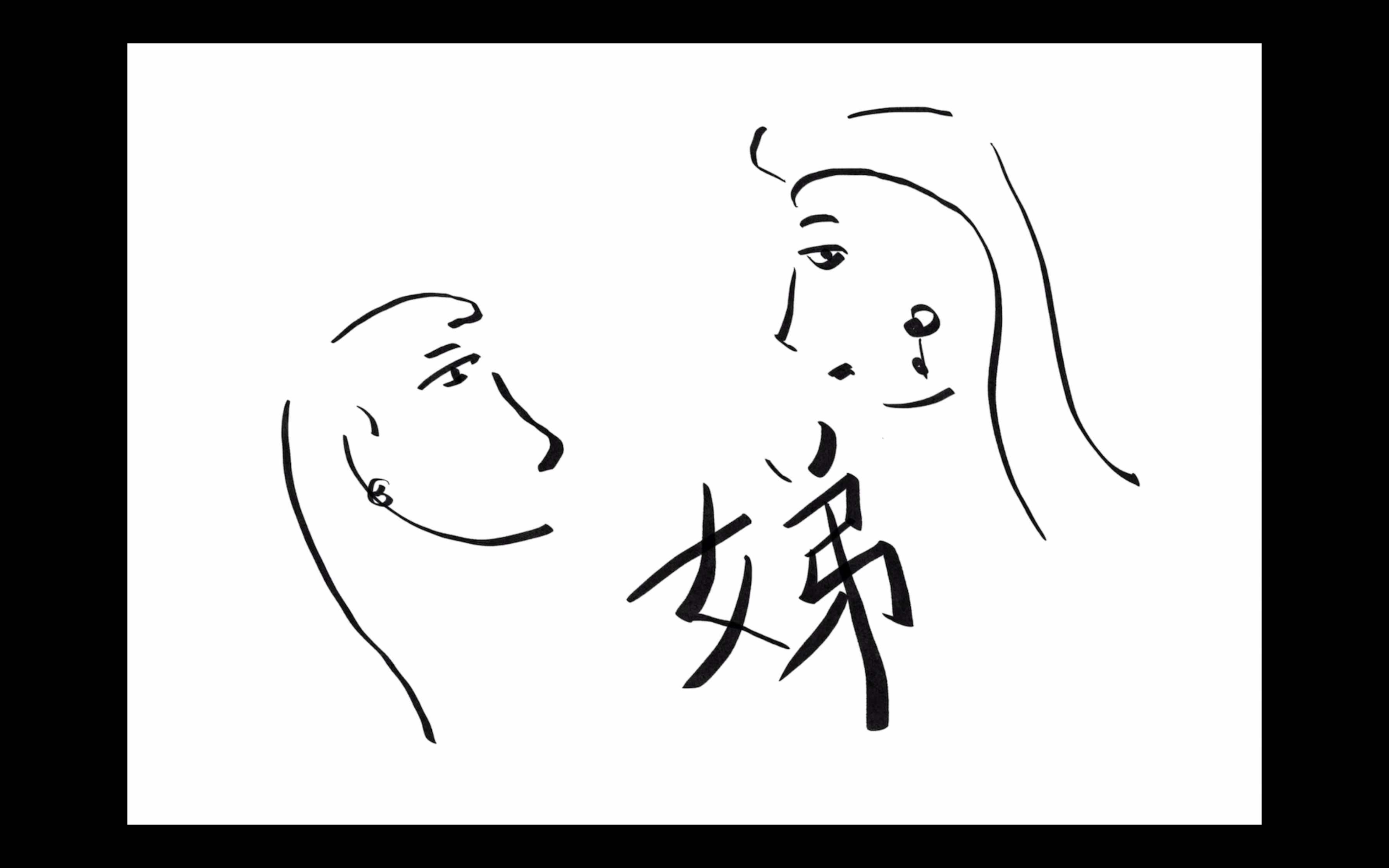
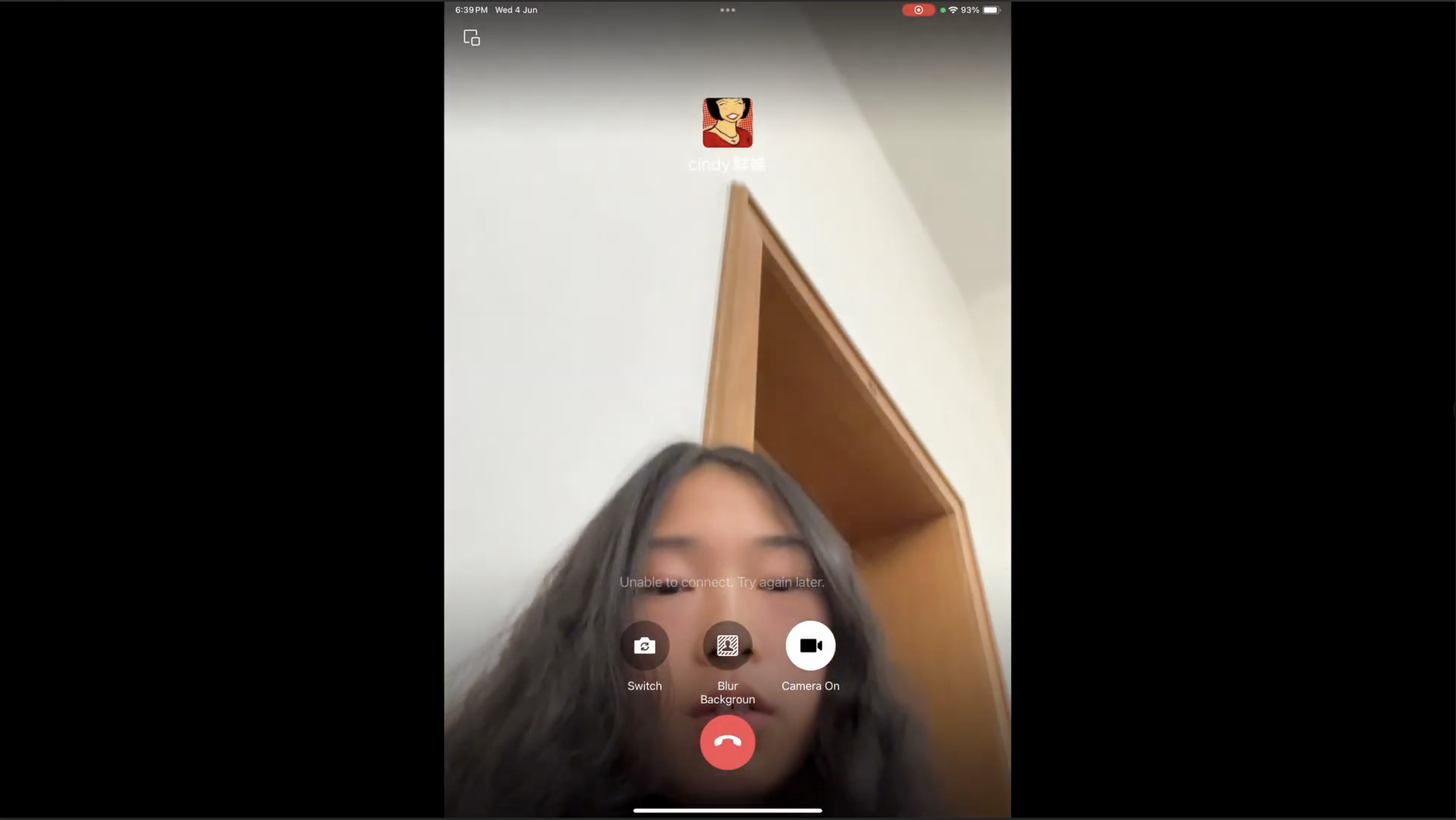
The meaning of my mother’s name, with the Chinese character “娣”, is a wish for a son. I was told that my mom had an abortion before I was born, and I wondered if I, too, was unwanted as a second daughter.
Director’s Note
Something as simple as a name can carry generations of hope. This film reveals something about gender expectations in my family.
The discovery of my mother’s name made me think about how names carry unspoken desires and disappointments. Women with the same name in her generation or from a village in mainland China are a social phenomenon, and names usually stick with people for their whole lives. The meanings of names are important. I think it is an interesting entry point to raise the hidden value on the table.
The preference for a son is still so traditionally common in Chinese cultures, and it is also influenced by family planning policies and cultural pressure.
Documentary
6m3s
English and Cantonese Dialogues with English Subtitles
Synopsis
The meaning of my mother’s name, with the Chinese character “娣”, is a wish for a son. I was told that my mom had an abortion before I was born, and I wondered if I, too, was unwanted as a second daughter.
Director’s Note
Something as simple as a name can carry generations of hope. This film reveals something about gender expectations in my family.
The discovery of my mother’s name made me think about how names carry unspoken desires and disappointments. Women with the same name in her generation or from a village in mainland China are a social phenomenon, and names usually stick with people for their whole lives. The meanings of names are important. I think it is an interesting entry point to raise the hidden value on the table.
The preference for a son is still so traditionally common in Chinese cultures, and it is also influenced by family planning policies and cultural pressure.
Contextualization
The film grew from my interest in a Chinese character from my mother’s name, which led me to reflect on family expectations, gender roles, and my experience as a second daughter. The film combines personal narration, dialogue, and archival material to explore how memory, identity, and generational expectations shape relationships.
Character structure
The radical “女” on the left signals a female-related meaning; the radical “弟” on the right means younger brother
娣 traditionally means “younger sister-in-law”, specifically: a younger brother’s wife, or a woman of lower rank in a hierarchical family structure
While the single character does not explicitly mean “hope for a son,” the character 娣 does suggest:
In families with traditional gender expectations, giving a daughter a name with 娣 may implicitly reflect her position as "the other girl", especially if the firstborn was also a daughter and the family was hoping for a son.
The film grew from my interest in a Chinese character from my mother’s name, which led me to reflect on family expectations, gender roles, and my experience as a second daughter. The film combines personal narration, dialogue, and archival material to explore how memory, identity, and generational expectations shape relationships.
Character structure
The radical “女” on the left signals a female-related meaning; the radical “弟” on the right means younger brother
娣 traditionally means “younger sister-in-law”, specifically: a younger brother’s wife, or a woman of lower rank in a hierarchical family structure
While the single character does not explicitly mean “hope for a son,” the character 娣 does suggest:
- A secondary or lower female status within the family
- Often used to contrast with or complement an older daughter or sibling
- In some contexts, 娣 appears in names that express familial hierarchy (like being the second girl)
In families with traditional gender expectations, giving a daughter a name with 娣 may implicitly reflect her position as "the other girl", especially if the firstborn was also a daughter and the family was hoping for a son.
P.S. The film was screened at a semi-public occasion. At the moment, I have decided not to screen it publicly in the future because it contains family archive footage, even though I recorded most of the material myself as a child. I am still not fully comfortable sharing my family’s intimacy with a wider audience. Nevertheless, the concept was successfully conveyed, and the project served as an important creative practice for me as a filmmaker to confront my own personal obstacles. Through the process, I was healed and reconciled with my mother, and in that sense, the film has already fulfilled its purpose.

„Black Sand“ (Hamburg, 2025)
Poetry
2m58s
English
Monologue/Poem
I used to think sand was all black
I remember my dad used to bring us to Hac Sa
And he would tell us these stories about seeing a typhoon by the beach
I remember he told us that
He chased the wind
Once, he drove to the sea
looking without worrying
and faced the storm
The water was freezing
He stood there, sneezing
Another time, he was with me
I was six years old
I saw the biggest wave of my life
I never forget it
He lived in his madness and died with his fullness
I saw the flame of his body
And so I see new colors
Poetry
2m58s
English
Monologue/Poem
I used to think sand was all black
I remember my dad used to bring us to Hac Sa
And he would tell us these stories about seeing a typhoon by the beach
I remember he told us that
He chased the wind
Once, he drove to the sea
looking without worrying
and faced the storm
The water was freezing
He stood there, sneezing
Another time, he was with me
I was six years old
I saw the biggest wave of my life
I never forget it
He lived in his madness and died with his fullness
I saw the flame of his body
And so I see new colors
Contextualization
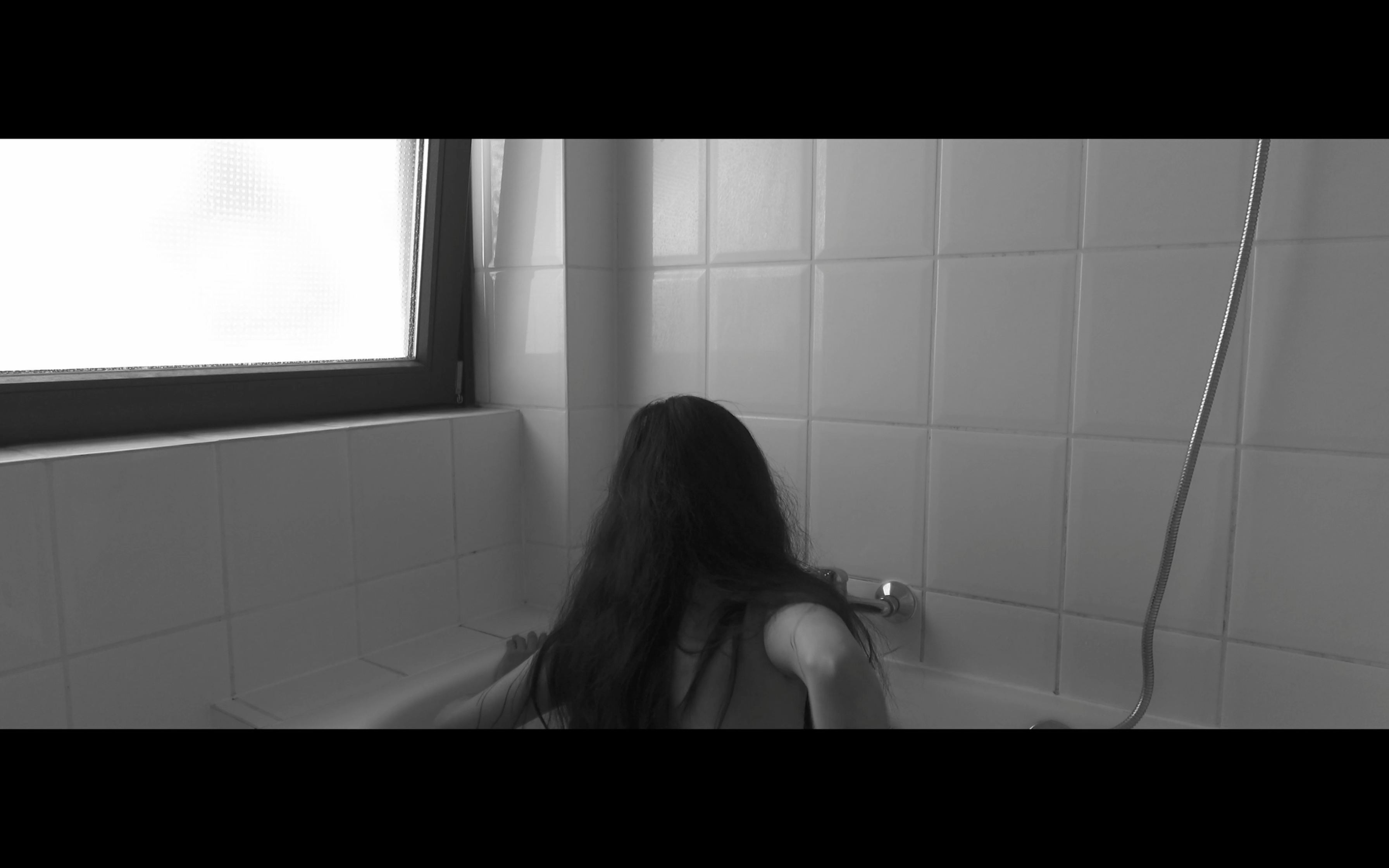
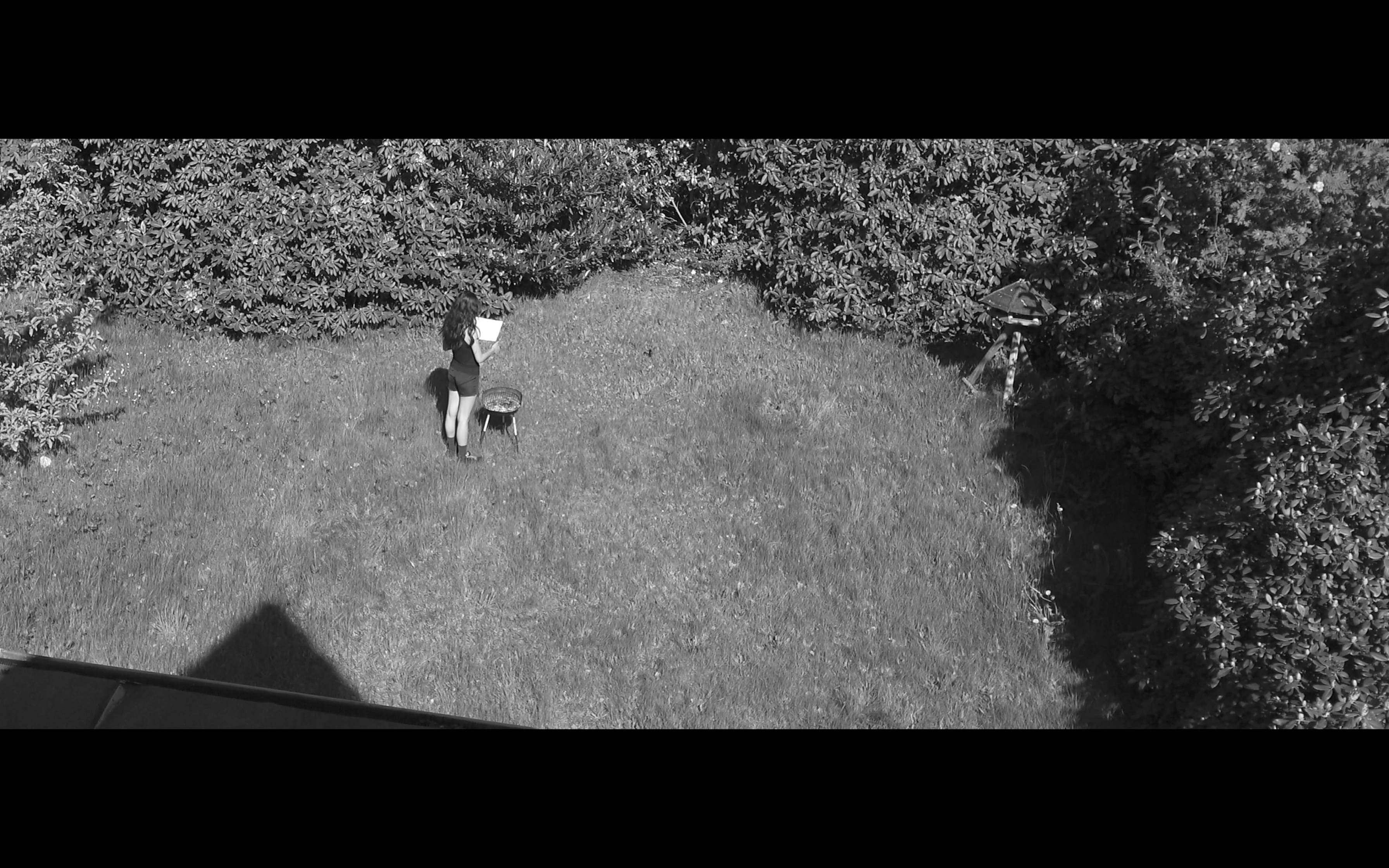
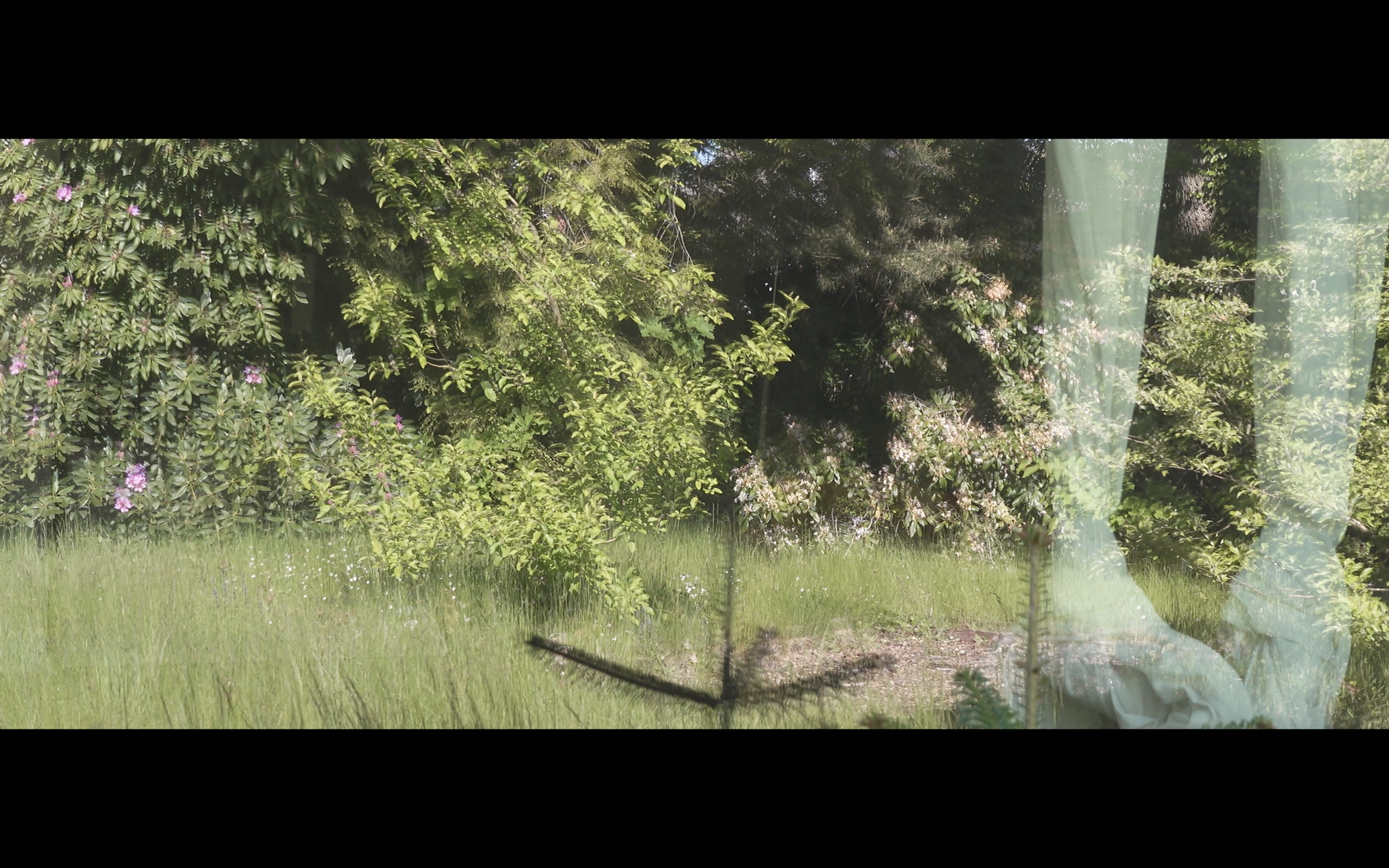
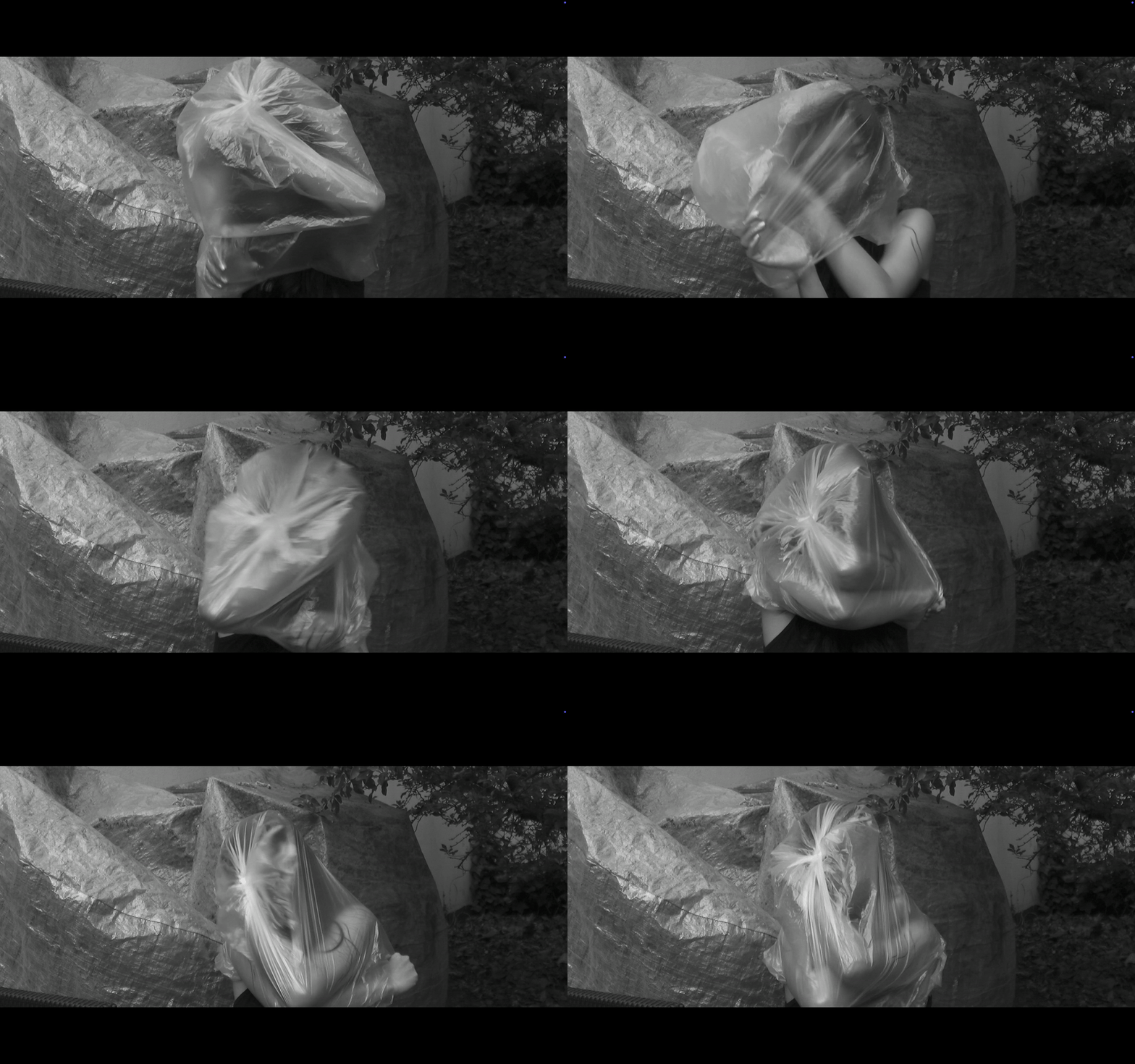
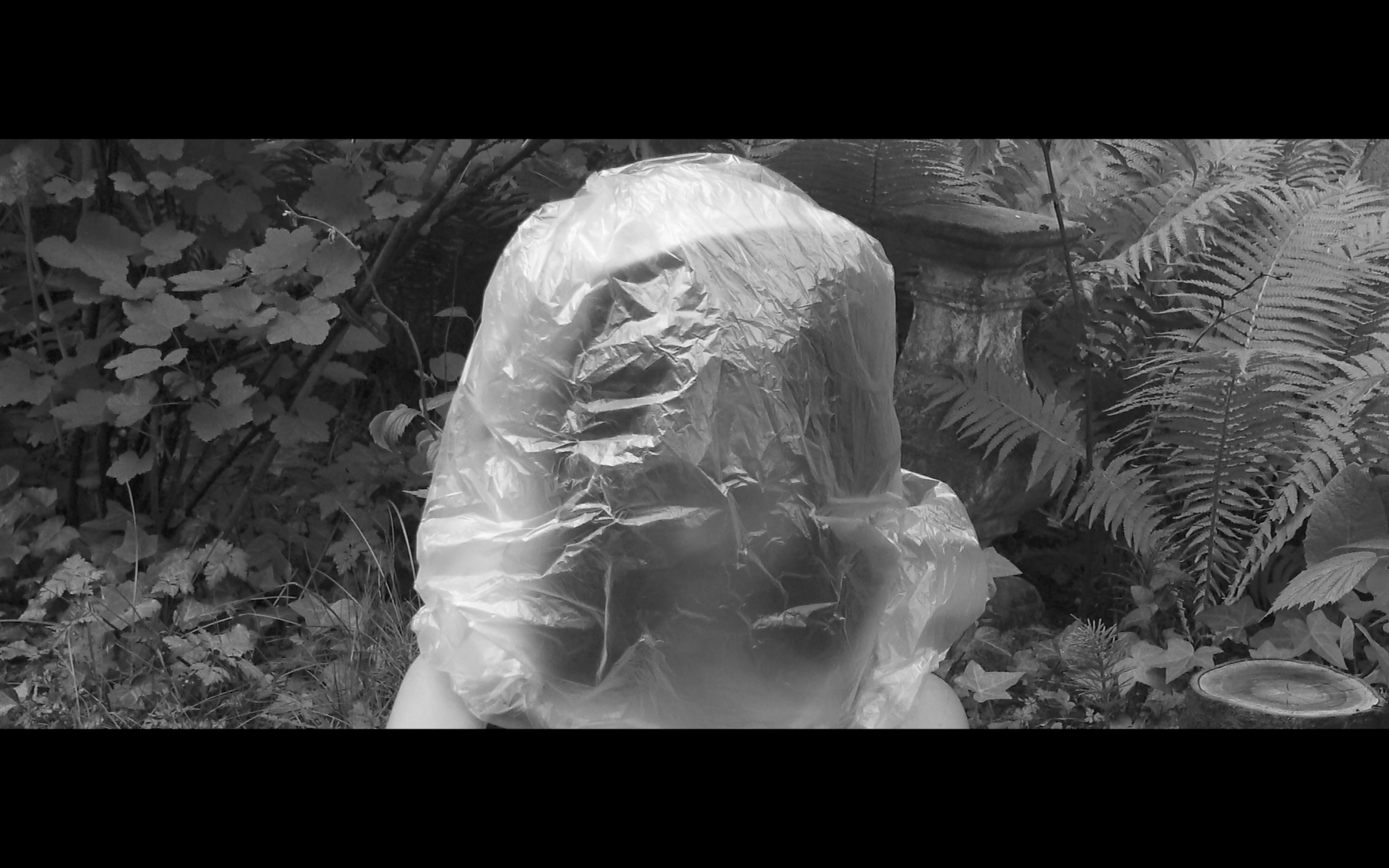
This film was developed as a personal exploration of memory, loss, and cultural ritual, rooted in my own childhood experiences. I created the footage combining filmed scenes, monologue, and symbolic imagery to evoke a typhoon, the sea, and the black sand beach of my childhood. The work reflects on the death of my father, using ritual and cultural symbolism.
In Macau, there is a beach called Hac Sa, which translates to "Black Sand Beach." As a child, I believed that all sand was black, since this was the only beach I had ever encountered. The black sand, therefore, became an enduring symbol in my memory, representing both the specific place and time of my childhood, as well as a metaphor for death. In Chinese culture, there is a belief that the ashes of a person who has died from an illness may turn black or grey.
The act of burning joss paper, often referred to as "ghost money", is a traditional Cantonese practice performed to honour deceased ancestors. The idea is that by burning these symbolic offerings, the living help ensure the comfort and well-being of their ancestors in the afterlife. This ritual is commonly associated with the Qingming Festival or funerary ceremonies, and it expresses both reverence and filial piety. In the context of the film, I chose to burn a letter to my late father, symbolizing my attempt to send him this fragment of memory, a moment from my past that we once shared. The sound of the letter burning in the film was imitating the chanting of a Taoist priest, traditionally heard during Cantonese funeral ceremonies.
This film was developed as a personal exploration of memory, loss, and cultural ritual, rooted in my own childhood experiences. I created the footage combining filmed scenes, monologue, and symbolic imagery to evoke a typhoon, the sea, and the black sand beach of my childhood. The work reflects on the death of my father, using ritual and cultural symbolism.
In Macau, there is a beach called Hac Sa, which translates to "Black Sand Beach." As a child, I believed that all sand was black, since this was the only beach I had ever encountered. The black sand, therefore, became an enduring symbol in my memory, representing both the specific place and time of my childhood, as well as a metaphor for death. In Chinese culture, there is a belief that the ashes of a person who has died from an illness may turn black or grey.
The act of burning joss paper, often referred to as "ghost money", is a traditional Cantonese practice performed to honour deceased ancestors. The idea is that by burning these symbolic offerings, the living help ensure the comfort and well-being of their ancestors in the afterlife. This ritual is commonly associated with the Qingming Festival or funerary ceremonies, and it expresses both reverence and filial piety. In the context of the film, I chose to burn a letter to my late father, symbolizing my attempt to send him this fragment of memory, a moment from my past that we once shared. The sound of the letter burning in the film was imitating the chanting of a Taoist priest, traditionally heard during Cantonese funeral ceremonies.
„Family Photographic Archives: Memory, Migration, and Social Change“ (Macau, 2025)
Interview (fieldwork for an essay)
15m13s
Cantonese Dialogues with English Subtitles
Participant
AO Pok Chi, HUI Ka Ion, CHEONG Hao I
Interview (fieldwork for an essay)
15m13s
Cantonese Dialogues with English Subtitles
Participant
AO Pok Chi, HUI Ka Ion, CHEONG Hao I
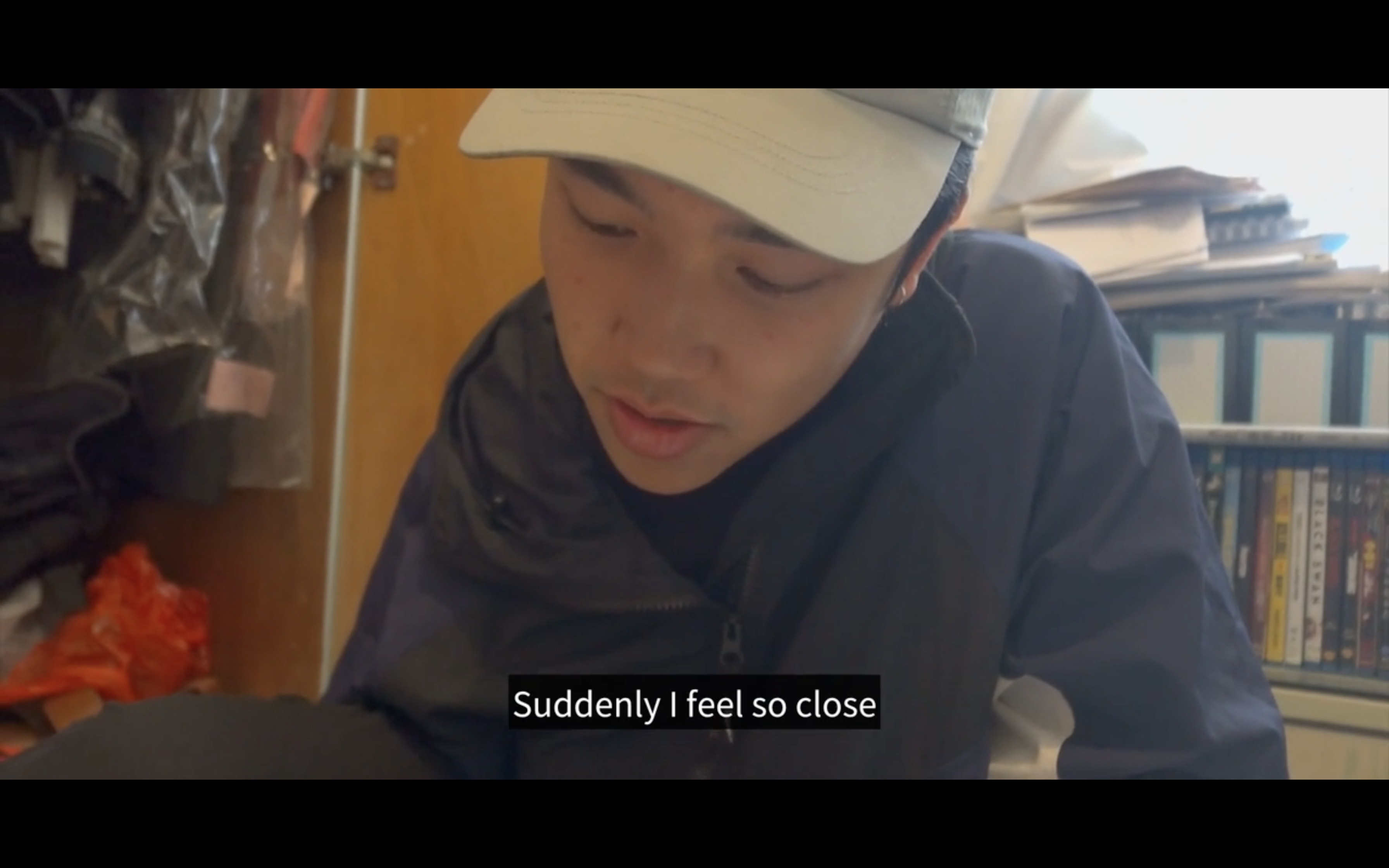
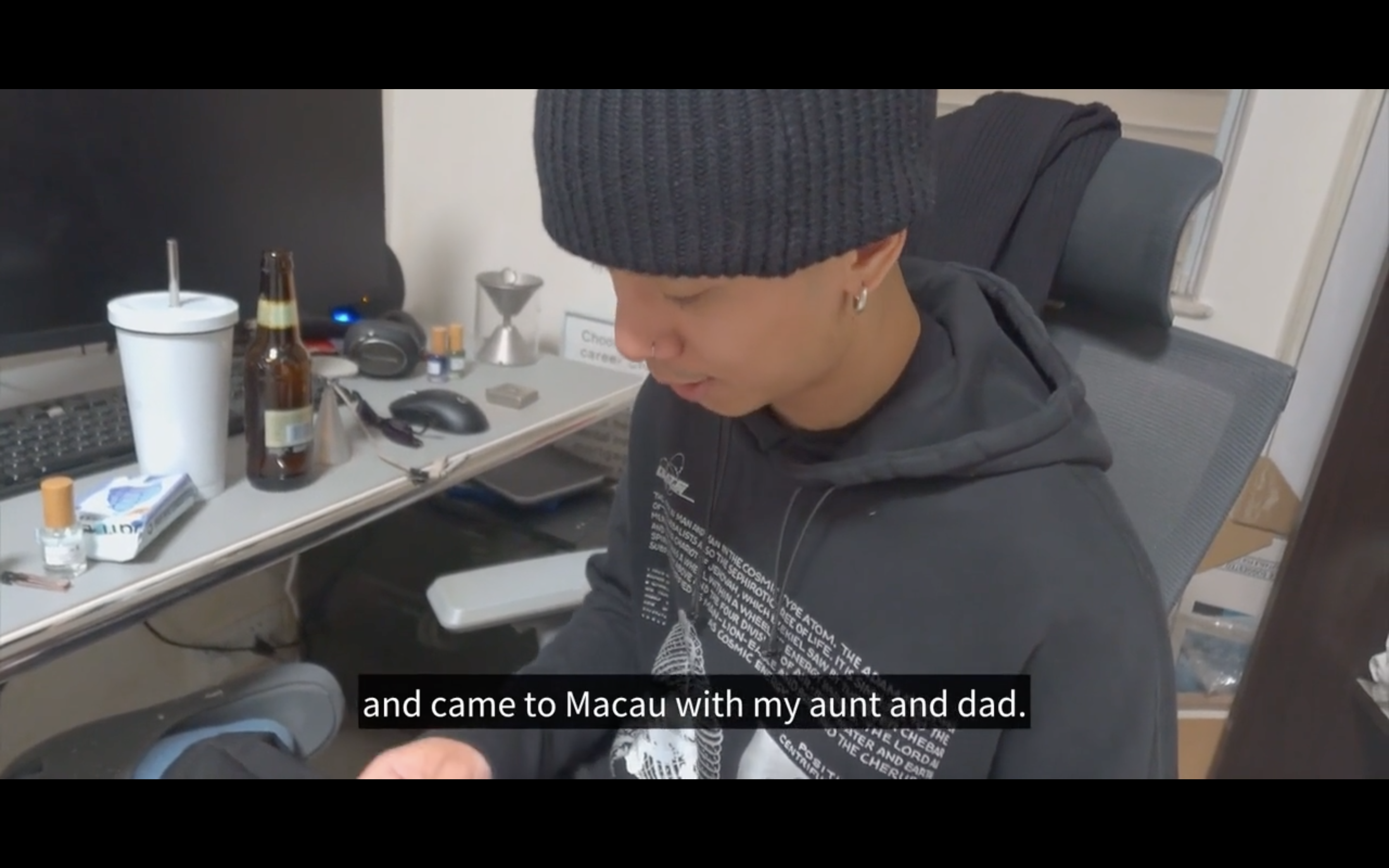
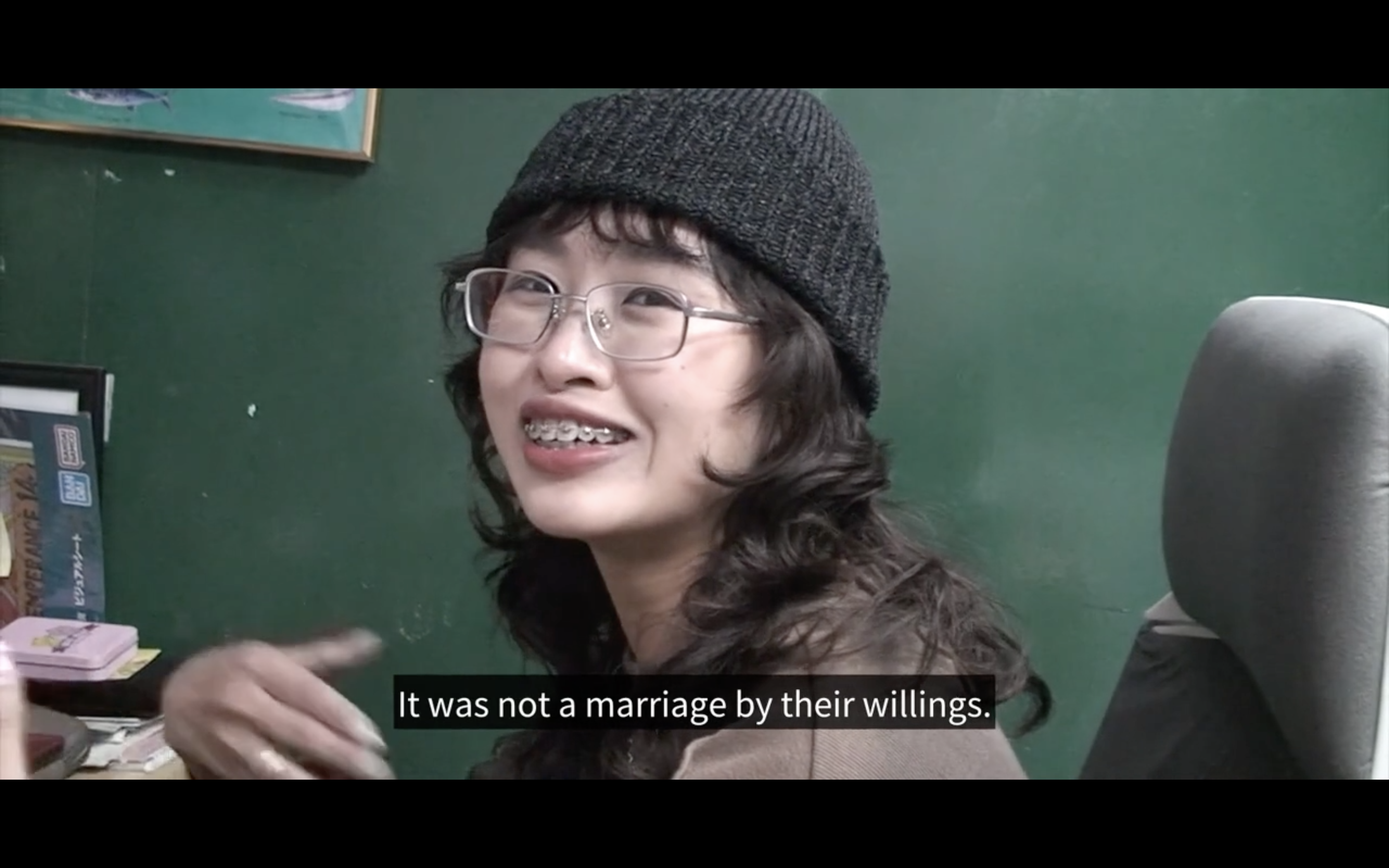
The essay explores the role of family photographs as both personal and collective artifacts that shape emotional memory, family migration narratives, and identity within the context of social change. Beyond their sentimental value, these photographs serve as historical records, reflecting broader cultural shifts and intergenerational connections. I reviewed literature on family photography and its function as an archive, and I designed a mini fieldwork study to support my research for this essay.
I conducted interviews with three friends from Macau, filming their responses as they shared and reflected on their family photographs. These discussions provided insight into how people interpret and assign meaning to their family archives, revealing not only personal histories but also larger social and cultural influences. Each participant’s collection (both in digital and analog forms) encapsulates significant narratives, from documenting trauma and separation to capturing cross-cultural identities and family migration.
Through the conversation with my participants, from Ao’s difficult recollections of his parents' divorce to Hui’s experience of growing up in a bicultural household across borders and Cheong’s exploration of her grandmother’s mixed heritage, each case study highlights the emotional and historical dimensions of family photography by revisiting their family photographic archives.
I conducted interviews with three friends from Macau, filming their responses as they shared and reflected on their family photographs. These discussions provided insight into how people interpret and assign meaning to their family archives, revealing not only personal histories but also larger social and cultural influences. Each participant’s collection (both in digital and analog forms) encapsulates significant narratives, from documenting trauma and separation to capturing cross-cultural identities and family migration.
Through the conversation with my participants, from Ao’s difficult recollections of his parents' divorce to Hui’s experience of growing up in a bicultural household across borders and Cheong’s exploration of her grandmother’s mixed heritage, each case study highlights the emotional and historical dimensions of family photography by revisiting their family photographic archives.